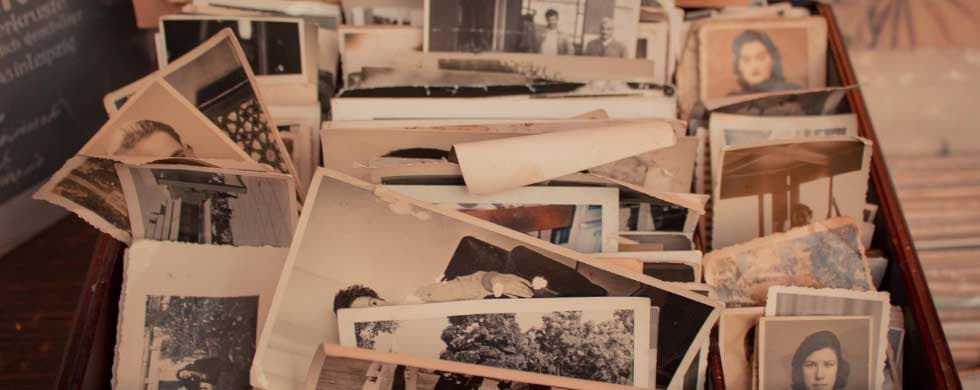
We're all probably familiar with our grandmother's scrapbook collection. You know — those large, usually dusty albums filled with photos, postcards, old greeting cards, and other paper memorabilia. Today, everything is digital and most likely online in social media accounts or blogs. Even our grandparents have become social media wizards, posting family-friendly memes and uploading hundreds of photos, some of which are not exactly masterpieces of photographic art.
However, nothing will ever beat a scrapbook, or memory book. There's just something more intimate and special about physical memory books that you can hold in your hands and flip through. Sure, there are a lot of great digital options out there, like telling your family' story through a Memories Online Memorial. But we should appreciate the old-school ways of archiving memories as well.
So, here are 5 steps to create a family memory book:
1. Gather and curate
First things first: gather the materials you would like to include in your memory book. Remember, this is not your grandma's old-fashioned scrapbook, although you're making this memory book in the spirit of that tradition. Don't be afraid to get creative and think outside the box. You shouldn't just gather stacks of photos: if you do, you'll just end up with a regular photo album.
Try to collect photos, postcards, and holiday and birthday greeting cards. If your family member was featured in a local newspaper, that is definitely something that's worth including in your memory book. Other memorabilia include ticket stubs, such as the first baseball game your father or grandpa took you to. Or perhaps they're from a play or movie you watched with your spouse on one of your dates.
A plane ticket could add a dimension to your vacation photos, as could foreign currency from places you've visited. You can even press dried flowers that signify a special event from the past, or symbolize someone's love.
Think like a museum curator. What "artifacts" from your life would you like to display in your family museum? By viewing your memory book like a tangible version of your family history — because that's essentially what it is — you'll be able to come up with some really creative ways to tell stories.
2. Choose your memory book template
One of the most important aspects of the memory book is the format and template itself. There are many choices out in the market. If you're an online shopper, don't forget to check out a good old physical store as well. There are some unique albums and scrapbooks available in actual stores that you might not find online, especially in stationary boutiques, where scrapbooks may be handmade by local book binders.
For families who want both a digital and physical book, the Memories Hardcover Memory Book Builder takes everything gathered in the online memory book and transforms it into a beautifully designed printed heirloom — professionally printed, elegantly laid out, and ready to hold in your hands. You don't need any design experience.
3. Collaborate
The richest family memory books are built from many contributions. Each family member holds a different part of the story — different eras, different relationships, different memories that nobody else has.
Reach out early and broadly. Ask specific questions rather than open ones: "Do you have any photos from Mum's years in Ireland?" or "What's your favourite memory of Dad at Christmas?" produces more than a general request. People have more than they realise — and they need to be asked.
If family members are spread across different cities or countries, a shared contribution link makes this straightforward. The Memories Online Memory Book provides exactly this — anyone with the link can upload photos, videos, and written memories directly, from any device, without needing an account. Everything arrives in one place, ready to use.
Collaboration isn't just practical. It's part of the point. Hearing how others experienced the same people and events — and sharing your own — is one of the most meaningful things a family memory book makes possible.
4. Bring stories to life with written tributes and a biography
Photos capture moments. Words capture meaning. A family memory book that includes written tributes, stories, and biographical detail tells a far richer story than images alone.
For each person featured, consider writing a short biographical note — where they were born, how they lived, what defined them, what they meant to the people around them. For family members who have passed, the Memories Biography Writer guides you through this with structured prompts, producing a personalised first draft to shape and make your own.
If the memory book is being created for a funeral or memorial context, the Eulogy Writer and Obituary Writer can provide written tributes that sit naturally alongside the photographs. Content written once in the Memories platform flows through to wherever it's needed — the online memory book, a printed hardcover, or an order of service.
Don't overlook the small things. A phrase someone always used. A habit everyone remembers. A story that gets told at every family gathering. These details bring a person to life on the page in a way that formal biography can't.
5. Proof & Print
Once you've figured out your layout, think about how you want to present the beautiful lives of your family members. Each person in your family is unique, and each one has a great story to tell. While you can tell an overall narrative of your family through shared memories (e.g. vacations, family reunions, and celebrations), you should also try to give each member their own "chapter".
For instance, if your child is a sports fan, you can dedicate a few pages of the memory book to their passion. Along with photos of them playing or watching sports, you can include ticket stubs to games they've attended, or a ribbon they received from participating in a sporting event.
If you want to tell the story of a family member who has already passed away, you can arrange photos like a timeline, showing their childhood pictures first. Include depictions of their major accomplishments like a graduation photo, as well as interesting milestones in their life, such as military photos or wedding anniversaries.